Choosing the Best Countertop Material for Your Kitchen
Counters take a beating. They’re where you chop veggies, set down groceries, roll out cookie dough, and sometimes just drop your keys at the end of the day. When you’re remodeling your kitchen, choosing the right countertop material isn’t just about looks . It’s about finding something that can keep up with your life.
If you’re still in the early stages of a remodel, you may also want to check out our Ultimate Guide to Winston-Salem Kitchen Remodels.
Start with How You Use Your Kitchen
Before you get swept away by pretty samples at the showroom, think about how you actually use your kitchen.
Do you cook every day or mostly order in? Are you okay with a little upkeep, or do you want something that never needs sealing? Do you love the idea of a natural stone, or is low-maintenance more your style?
Your lifestyle will narrow the choices faster than you think. And remember, cabinets play just as big a role in function as counters. Here’s our breakdown of custom vs. prefabricated cabinets to help you weigh both together.
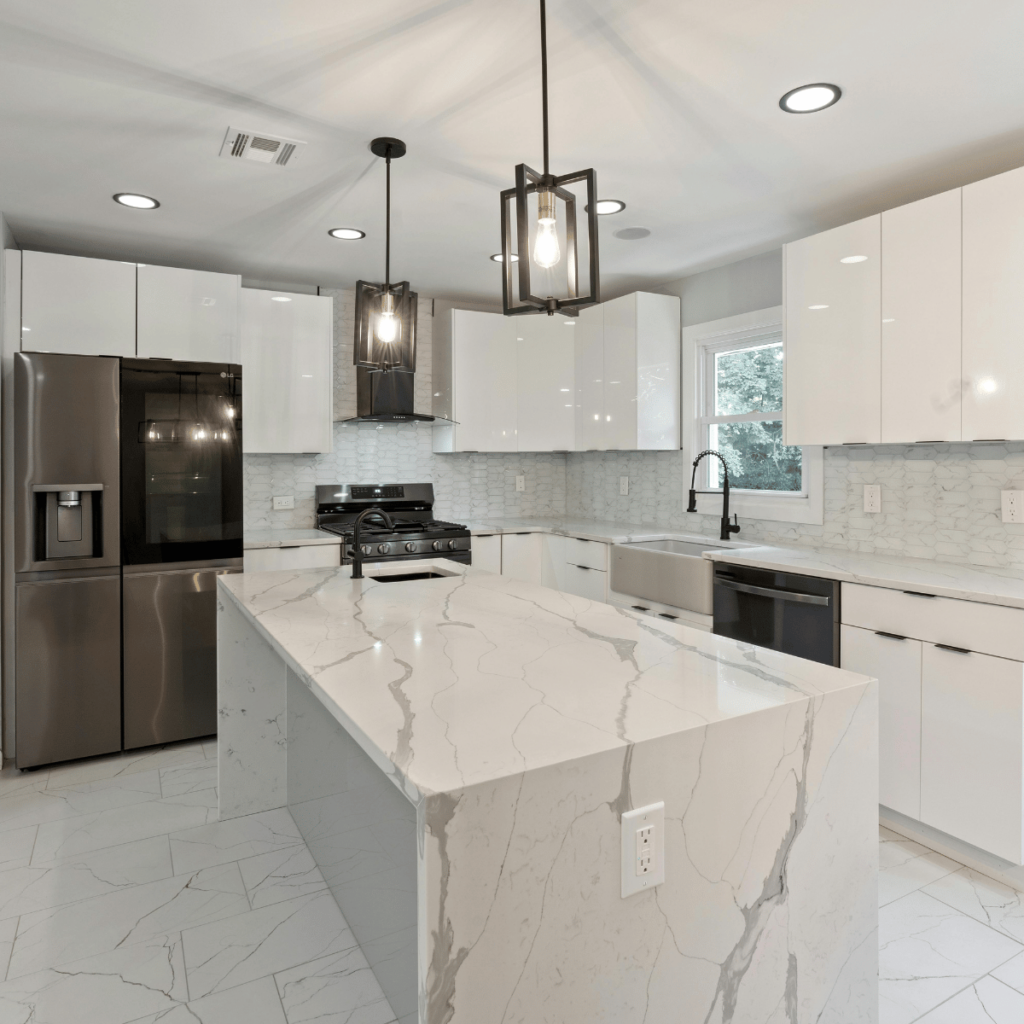
Quartz: The Low-Maintenance Favorite
Quartz isn’t 100% natural stone. It’s engineered with crushed quartz, resin, and pigments, but it’s tough, non-porous, and doesn’t need sealing. Spills don’t stain easily, and you can get it in just about any color or pattern. It’s a good fit for busy households that want style without the extra care.
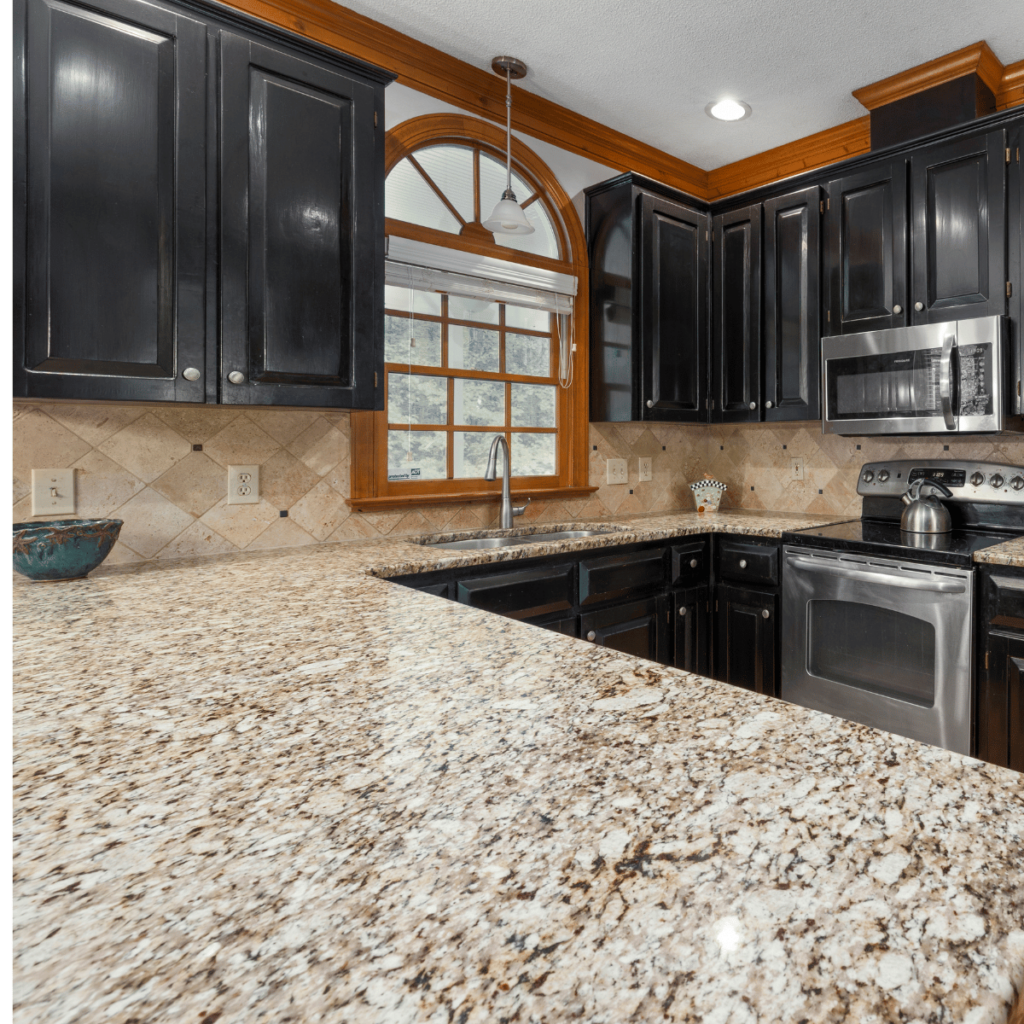
Granite: The Classic
Granite has been around for decades for a reason. Every slab is unique, so your kitchen gets its own one-of-a-kind look. It’s heat-resistant and holds up well, but it does need to be sealed from time to time to prevent staining.
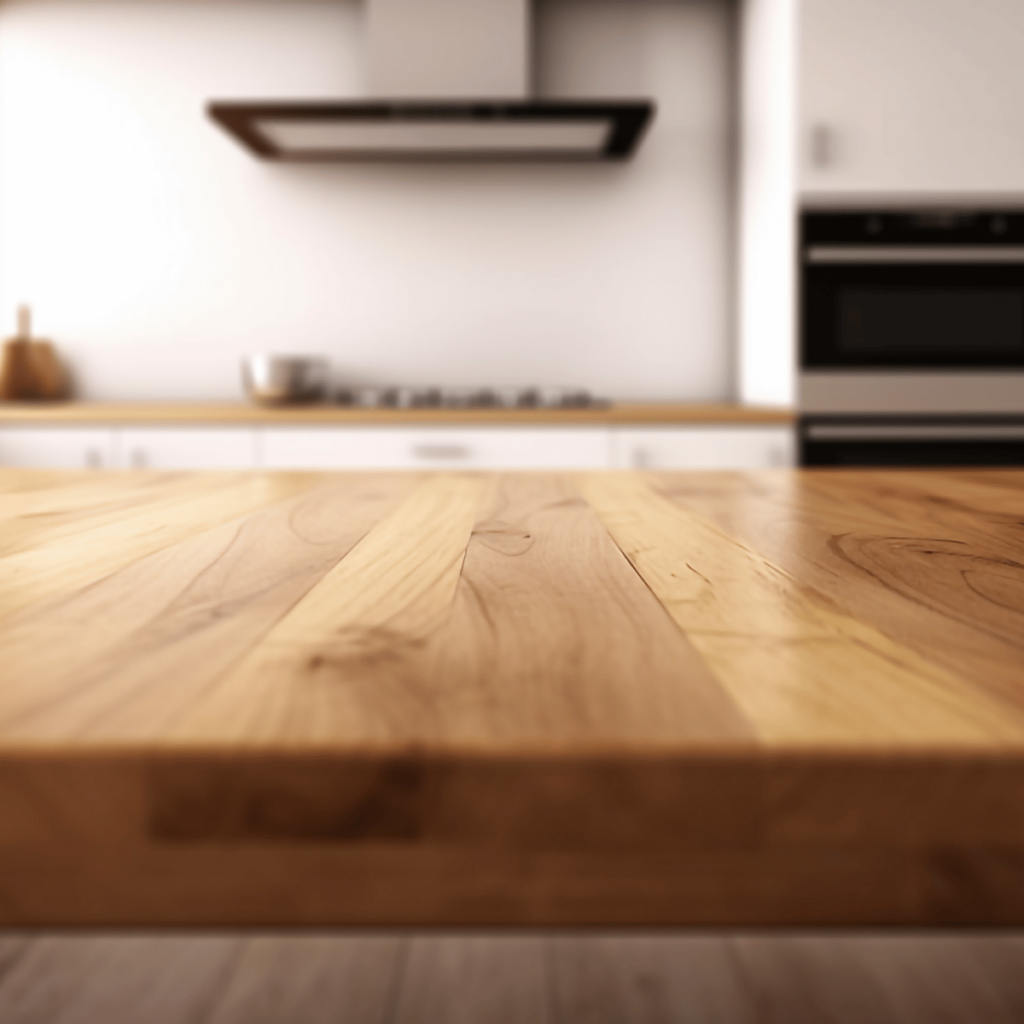
Butcher Block: Warm and Inviting
Wood countertops add warmth that stone can’t. They’re great for food prep and can be sanded down if they get scratched. The trade-off? They need regular oiling and aren’t the best at handling constant exposure to water.
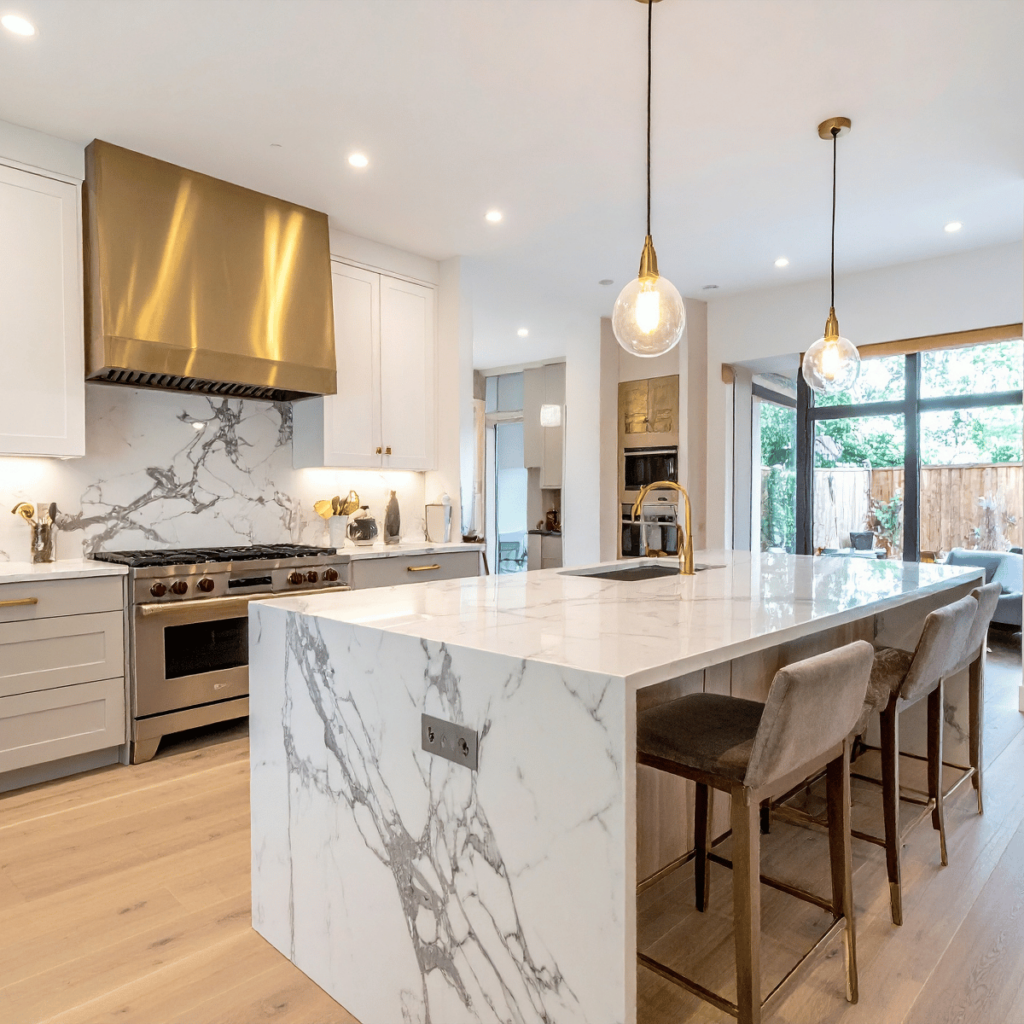
Marble: Beautiful but High-Maintenance
Marble is a showstopper. Soft veining, timeless elegance, but it’s also porous and softer than granite. It can scratch and stain more easily, so it’s better for lower-traffic kitchens or people who don’t mind a bit of patina.
Concrete: Modern and Customizable
Concrete can be poured into almost any shape and tinted to match your kitchen. It’s bold and industrial-looking, but it needs sealing and can develop hairline cracks over time. Some people love the character; others don’t.
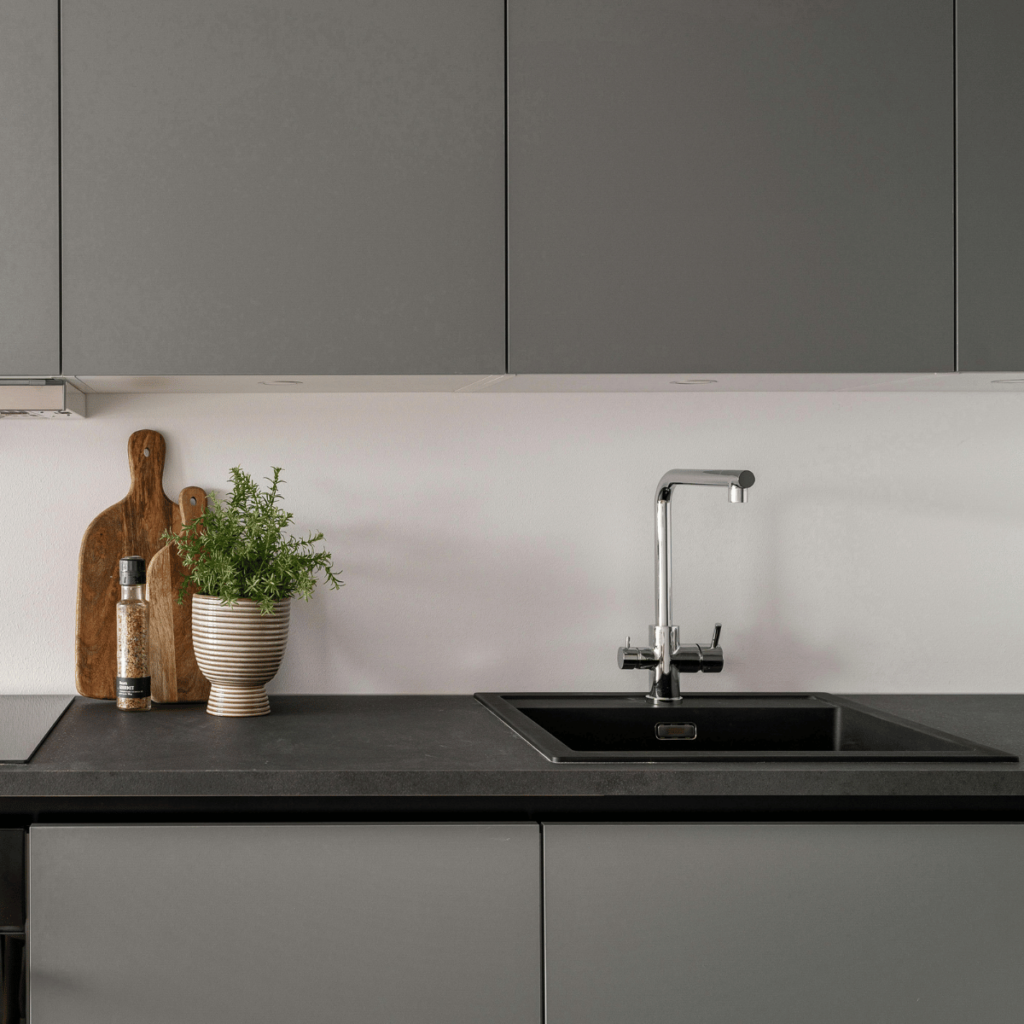
Laminate: Budget-Friendly Style
Today’s laminates look a lot better than they used to. They’re affordable, come in endless patterns (including stone-look designs), and are easy to clean. The downside is they can scorch or chip if you’re not careful.
A Few Other Options
Soapstone, stainless steel, recycled glass — there are plenty of less common materials that might be perfect for your space. Sometimes it’s worth mixing materials, like an island in butcher block and perimeter counters in quartz. See our kitchen layout ideas for inspiration.
The Bottom Line
There’s no one “best” countertop material. The right choice depends on your budget, style, and how you live day to day.
If you’re planning a kitchen remodel, Nagy Home Solutions can walk you through the options, help you compare pros and cons, and make sure your counters look great and work hard for years to come.